
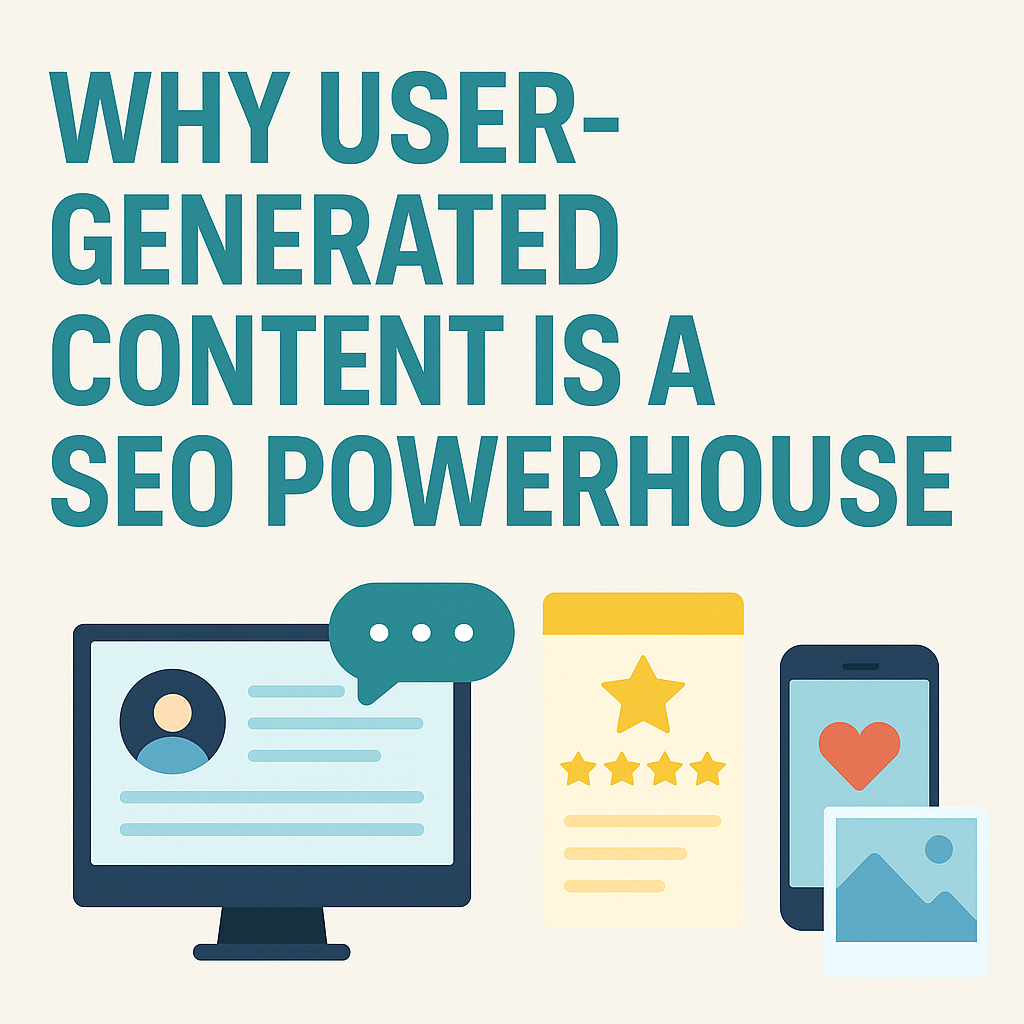
Why User‑Generated Content Is a SEO Powerhouse

When it comes to SEO, fresh, relevant content is gold—but producing it all in-house isn’t scalable. That’s where user-generated content (UGC) shines. Whether it’s blog comments, product reviews, photos, or forum posts, UGC offers unique advantages for search engines and businesses alike. We examine why UGC is so effective for SEO, what types are most valuable, and how to leverage it without sacrificing control or quality.

What Makes UGC So Valuable for SEO

  • Constant Freshness: Search engines prioritize new information. Websites populated with UGC deliver frequent updates, showing Google there’s a living, active community.
  • Diverse Perspectives: When multiple users contribute, each adds their own angle—often phrased differently, covering edge scenarios search engines love.
  • Low-cost Scalability: Instead of hiring content creators, brands can rely on customers and users to organically fuel their content pipeline.
  • Social Proof: Reviews, testimonials, forum discussions—all of which resonate strongly with visitors, signal trust and authority to both users and search engines.

Key Types of UGC That Boost SEO

  • Product Reviews & Testimonials
    Real feedback adds long-tail keyword diversity and addresses concerns new customers may search for. Ratings and detailed insights enrich product pages.
  • Forum & Q&A Threads
    These naturally produce multi-layered content, with questions, answers, clarifications, and alternatives—creating dynamic, keyword-rich pages.
  • Comments & Community Posts
    A vibrant comment section on a blog or case study signals engagement and extends the life of the main content.
  • Customer Media (Photos & Videos)
    Visual UGC adds authenticity and boosts dwell time, while alt tags and filenames contribute additional SEO signals.

SEO Benefits: Beyond Just Keywords

  • Freshness Signal
    Frequent updates from UGC signal that a site is current and authoritative, prompting search engines to crawl and index more.
  • Keyword Expansion
    Everyday language from users includes niche terms and questions brands might overlook, unlocking new ranking opportunities.
  • Increased Engagement Metrics
    Higher time-on-page, repeat visits, and richer click patterns often result from UGC—behavioral signals that feed ranking algorithms.
  • Additional Indexable Content
    Even short comments or one-line reviews become unique text for search engines to index, broadening overall keyword footprint.

Best Practices for UGC You Should Follow

  • Moderation Is Key
    Carefully vet UGC to avoid spam, off-topic discussions, or poor grammar. Keep it high-quality while preserving authenticity.
  • Encourage Contribution
    Use contests, badges, or incentives to motivate users to submit reviews, ratings, or feedback.
  • Mark Up with Schema
    Use structured data (e.g., review schema, Q&A schema) so search engines can feature UGC in rich snippets.
  • Maintain Unique UGC
    Avoid duplicate or AI-generated content. Encourage original voices and viewpoints.
  • Keep UGC On-Brand
    Develop community guidelines and tone of voice to help align user posts with your brand values.

Risks & How to Avoid Them

RiskImpactMitigation
Inappropriate or Off-Topic ContentCould harm reputation or confuse visitorsUse moderation tools, manual reviews
Spam and SEO PenaltiesRisks algorithmic penalties or removalDeploy spam detection, CAPTCHA, verified accounts
Duplicate ContentMay dilute SEO equityClose outdated threads, combine similar content
Legal CompliancePrivacy or copyright breaches can be seriousObtain rights, share clear terms, include disclosures

Real-World Examples of High-Impact UGC

  • Retailers with Product Reviews: Reviews not only assist conversions but also provide long-tail keywords and schema markup that enhance visibility.
  • Educational Forums: Q&A threads teach, fuel SEO, and help communities grow. Multiple answers attract traffic on diverse queries.
  • Contests & Social Shares: Campaigns like “submit your photo” drive media-rich content and community interaction—plus social shares that echo across the web.

UGC FAQs

What qualifies as user-generated content?

UGC includes any content created by users rather than brands—this can be reviews, comments, forum threads, social media posts, photos, videos, and FAQs contributed by site visitors.

How does UGC improve my SEO rankings?

It boosts freshness signals, adds keyword-rich text (especially long-tail), improves engagement metrics (time on site, return visits), and increases indexed content—factors search engines reward.

How can I encourage users to contribute quality UGC?

Create incentives like rewards, badges, giveaways, or contests. Ask for reviews after purchase, prompt questions within forums, and keep the contribution process seamless.

Should I moderate every piece of UGC?

Yes—at minimum, moderate for spam, inappropriate content, and relevance. Use a combination of automated tools and manual reviews to balance openness with quality control.

Can UGC ever hurt my brand’s SEO?

If left unchecked, UGC can introduce spam, duplicate material, low-quality text, or violate legal terms. Use moderation, unique content policies, structured data, and compliance checks to safeguard your brand.
Posted in SEO

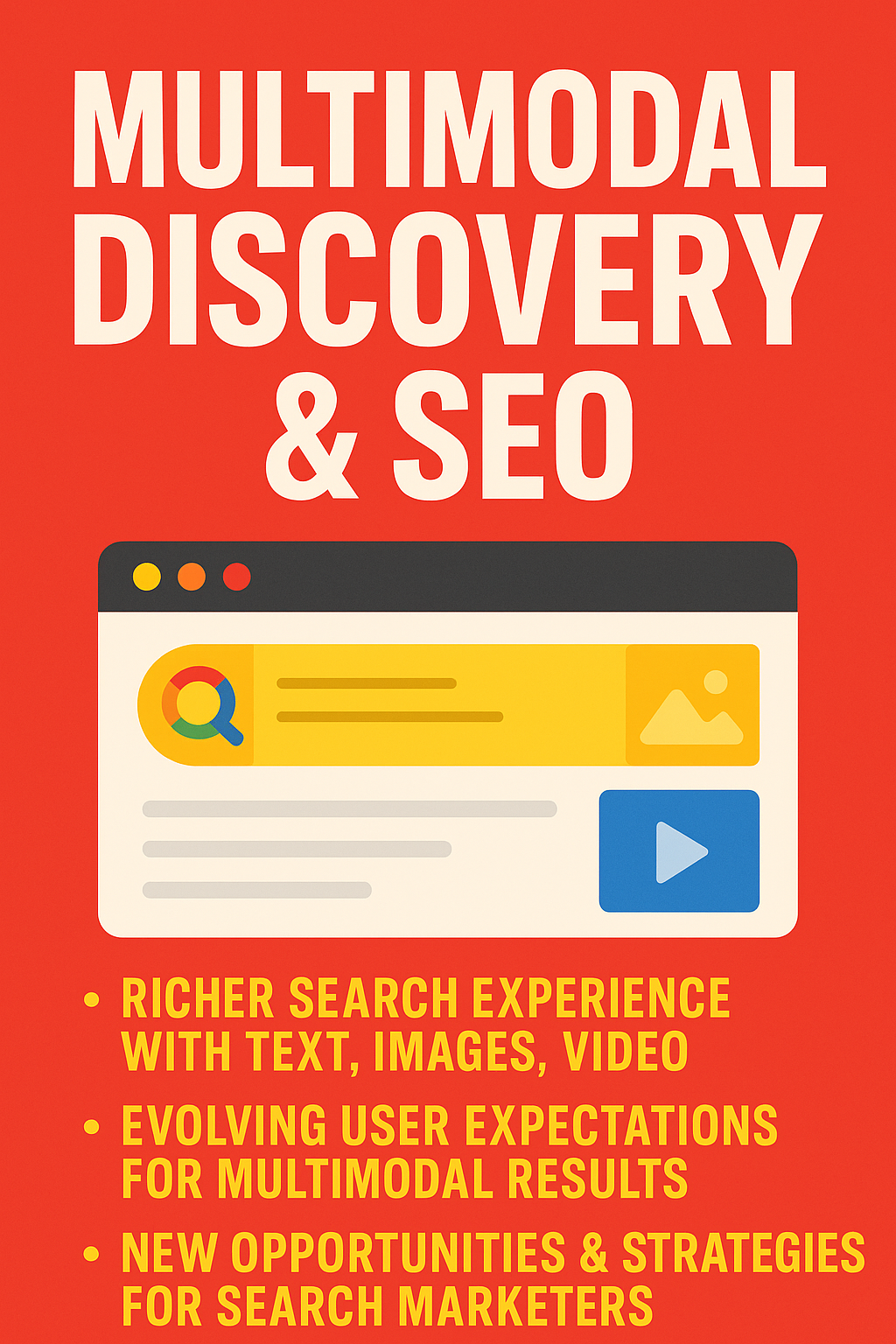
Multimodal Discovery Is Reshaping the SEO Landscape: Here’s What You Need to Know

The search journey is no longer linear. It’s layered, visual, and context-aware.

As search evolves, so does the way people interact with content. What used to be a simple keyword-based query has now become an experience shaped by images, text, voice, and even intent signals across platforms. This shift—known as multimodal discovery—is pushing brands and SEO strategists to rethink everything from keyword targeting to content structure.

In today’s landscape, discovery doesn’t always begin in a search bar. It can start with a photo on Pinterest, a product sighting in real life, or a voice command while cooking. And when it does, the expectations for fast, relevant, and intelligent results are higher than ever.

So, what exactly is multimodal discovery—and what does it mean for SEO? Let’s break it down.

Discovery isn’t just happening on Google anymore

One of the most important shifts in recent years is that search and discovery are happening across ecosystems, not just within traditional search engines.

  • A user sees a chair on Instagram, screenshots it, and uploads the image to Google Lens.
  • Someone uses their voice to ask Alexa to “find an oven like this under $1,000.”
  • A student points their camera at a graph and types, “explain this like I’m five.”

These are not isolated experiences—they’re everyday interactions that blend visual, textual, and spoken input. Platforms like Google, Pinterest, TikTok, and Amazon are now multimodal by design, enabling discovery to happen across input types and devices.

If your SEO strategy is still treating content as a keyword game, you’re already behind.

Why multimodal discovery changes the rules of SEO

Multimodal discovery doesn’t just shift how users search. It fundamentally changes what search engines prioritize.

Here’s why that matters:

Traditional ranking factors are no longer enough
It’s not just about title tags and meta descriptions anymore. Search engines need contextual signals—images that are properly labeled, videos that answer specific queries, and content that aligns with both visual and verbal cues.

Visual search is the new front door
People are increasingly starting their search journeys by snapping a photo or dragging an image. That image might be paired with a location, a question, or a specific attribute (“in blue,” “with a gold base,” “similar to this one”).

Voice is rising—but not alone
Voice search has long been touted as the next big thing. What’s emerging now is voice combined with visual context: “Hey Google, show me rugs like this under $300,” while pointing the phone at a screenshot.

The takeaway? Discovery is becoming multidimensional, and your SEO approach should be, too.

How to optimize for a multimodal search experience

If multimodal discovery is the future of search, then your optimization strategy needs to be more than mobile-friendly and keyword-rich. It needs to be contextually aware and visually optimized.

Here’s where to start:

Invest in visual content that works beyond your site
Images are no longer just design elements—they’re entry points for discovery. Every product photo, infographic, and video thumbnail needs to be optimized for search engines.

  • Use descriptive, keyword-focused file names (e.g., “leather-sling-chair-gold-frame.jpg”)
  • Add rich, readable alt text
  • Implement schema for products, images, and how-to content

Structure your content for voice and conversational search
Voice queries are longer, more specific, and often phrased as questions.

  • Use natural language in headers and FAQs
  • Create short, clear answers that work well as voice snippets
  • Optimize local listings for “near me” queries and contextual triggers

Build content ecosystems, not silos
Discovery is non-linear. A user might start on Instagram, jump to your blog, scan a QR code, and finish on a review site. Your content should be connected, consistent, and easily crawlable.

  • Interlink related content across formats (articles, videos, visual guides)
  • Maintain brand consistency across channels (GMB, Pinterest, YouTube, TikTok)
  • Tag images and videos with metadata that matches your written content

The role of AI and predictive relevance

As search engines incorporate AI-powered understanding, content is now judged on more than its on-page elements. Google’s Multisearch and Lens are already analyzing the relationship between images, questions, and context.

That means your SEO efforts should go beyond “what’s this page about” and answer “what will the user need next?”

This includes:

  • Suggesting follow-up content
  • Creating pathways for deeper exploration
  • Using structured data to signal related topics, products, and services

The best-performing content in a multimodal world doesn’t just match a query—it anticipates intent.

SEO isn’t dying—it’s diversifying

Some call these changes the end of traditional SEO. In reality, SEO is evolving into a more creative, human-centric discipline. Success now depends on your ability to:

  • Design content for multiple entry points (image, voice, video, text)
  • Understand how and where your audience initiates discovery
  • Connect the dots across every layer of the journey

The future of SEO isn’t just about showing up—it’s about showing up in the right format, at the right time, in the right context.

Multimodal SEO FAQs

What is multimodal discovery in SEO?
Multimodal discovery refers to search behavior that combines inputs like voice, images, text, and location to help users find content more intuitively. It’s a growing focus for platforms like Google, Pinterest, and TikTok.

How does visual search affect SEO strategies?
Visual search requires you to optimize images the way you optimize copy—using alt text, file names, and schema to help search engines understand and surface them across discovery tools like Google Lens.

Is voice search still relevant for SEO?
Yes, but it’s evolving. Voice search is now often paired with context (e.g., “show me shoes like this”) or local intent (“near me”), which requires more nuanced optimization.

What types of content perform well in multimodal search?
Product pages with rich visuals, blogs with embedded video and FAQs, and how-to content that includes images and step-by-step structure tend to perform best.

How can I prepare for the future of SEO?
Start by auditing your content for multimodal readiness: check if your images are optimized, your pages are structured for voice, and your metadata reflects how users search across channels.

Posted in SEO

Why Posting to Your Google Business Profile Boosts Your Online Visibility

If you run a business and want to show up in local searches, your Google Business Profile (GBP) is a powerful—and often underutilized—tool. Consistently posting to your GBP not only strengthens your local SEO but also boosts your overall online visibility and customer engagement.

What Is Google Business Profile?

Google Business Profile (formerly Google My Business) is a free tool that allows businesses to manage how they appear in Google Search and Google Maps. You can display your business hours, location, services, products, and customer reviews—all in one place. More importantly, you can post updates, special offers, events, and photos directly to your profile.

Think of GBP as your business’s front door on Google. When someone searches for your services nearby, your GBP is often the first thing they’ll see.

What Is Local SEO?

Local SEO is the practice of optimizing your online presence to attract more business from relevant local searches. This includes searches with geographic qualifiers like “near me,” “in [city],” or “[service] + [location].”

Local SEO involves several factors, including GBP optimization, local link-building, on-page SEO, and managing online reviews. Google favors businesses that regularly engage with their local audience, and one way to do that is by keeping your GBP active and updated with fresh posts.

What Does Online Visibility Mean?

Online visibility refers to how easily potential customers can find your business when searching online. High visibility means your business appears in more search results, gets more clicks, and attracts more traffic.

This visibility isn’t just about having a website. It includes being featured on maps, local directories, review sites, and—critically—your Google Business Profile.

Why You Should Post to Your Google Business Profile

Keeps your profile fresh and active
Google prioritizes active listings. By posting regularly, you’re signaling to Google that your business is active and relevant, which may improve your ranking in local search results.

Engages customers with timely updates
GBP posts let you share announcements, sales, blog content, and behind-the-scenes photos. These updates encourage customers to interact with your brand directly from the search results.

Boosts local SEO efforts
Each post gives Google more context about your business, services, and relevance to local search terms. Keywords used in GBP posts may support your local SEO goals and help Google categorize your business better.

Drives traffic to your website or landing page
You can include calls-to-action (like “Learn More,” “Book Now,” or “Order Online”) in each post, helping guide potential customers from your GBP to your website, booking platform, or contact page.

Improves trust and credibility
Regular posts show customers that you’re active, responsive, and up-to-date. This helps build trust—especially when paired with positive reviews and updated photos.

Provides insights into customer behavior
GBP offers analytics that show how people find your profile, what they click on, and how they engage with your content. This data helps you refine your local marketing strategy.

Free marketing real estate
You don’t have to pay to post on your GBP. It’s free exposure on the most-used search engine in the world.

Best Practices for Posting

  • Use high-quality images or graphics to grab attention
  • Include keywords naturally to support local SEO
  • Add a clear call-to-action (CTA)
  • Post consistently—at least once per week
  • Respond to questions and reviews to show engagement

FAQs

How often should I post to my Google Business Profile?
Ideally, post at least once a week. Regular posting signals activity to Google and keeps your customers informed.

What types of posts perform best?
Updates about promotions, events, blog content, and behind-the-scenes photos tend to perform well. Posts with a clear call-to-action are especially effective.

Do GBP posts help with SEO?
Yes, they can improve local SEO by increasing engagement and providing Google with more context about your business and offerings.

How long do posts stay visible?
Most posts are visible for seven days, although event posts stay up until the event date. It’s best to post regularly to keep your profile fresh.

Can I include links in my posts?
Yes, you can include clickable links that direct users to your website, product pages, booking forms, or blog posts.

What should I avoid posting?
Avoid promotional content that violates Google’s guidelines, such as misleading claims or sensitive content. Also, don’t keyword-stuff—keep your content natural and helpful.

Do customers actually see GBP posts?
Yes. Customers who search for your business name or services nearby often see your posts in the knowledge panel or Google Maps, especially on mobile devices.

Dynamic Part of Marketing Strategy

Your Google Business Profile is more than just a digital listing—it’s a dynamic part of your marketing strategy. By posting consistently, you’re not only improving your SEO but also building trust and driving engagement with local customers. If you haven’t started using GBP posts yet, now’s the time to make them a regular part of your content plan.

Sources

Moz. “Beginner’s Guide to Google Business Profiles: What Are They, How To Use Them, and Why”. https://moz.com/blog/beginners-guide-to-google-business-profile

BrightLocal. “Google Posts: How to Create Better Google Business Profile Updates”. https://www.brightlocal.com/learn/google-business-profile/optimization/google-posts/

Search Engine Journal. “Google Business Profile: A Complete Guide for Local SEO”. https://www.searchenginejournal.com/google-business-profile-overview/425984/

Google. “Improve your local ranking on Google.” https://support.google.com/business/answer/7091

We use cookies to enhance your browsing experience, personalize content, and analyze our traffic. By clicking “Accept,” you consent to our use of cookies. View our Privacy Policy for more information.